



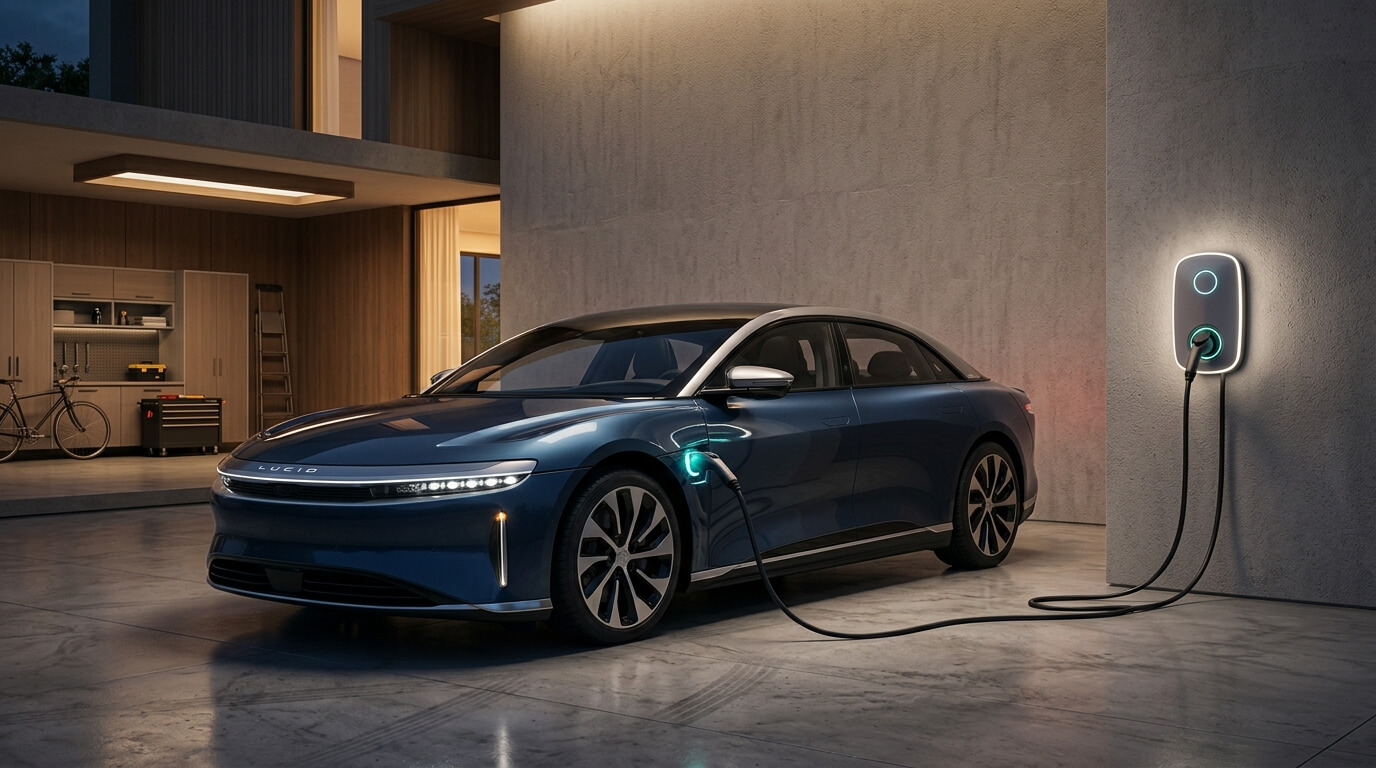
Everything You Need to Know Before You Go Electric
Understanding EV Charger Levels
Not all home charging systems are created equal. Selecting the right station starts with understanding the three levels of EVSE (Electric Vehicle Supply Equipment) and how each impacts your electrical infrastructure, station cost, and daily charging routine.
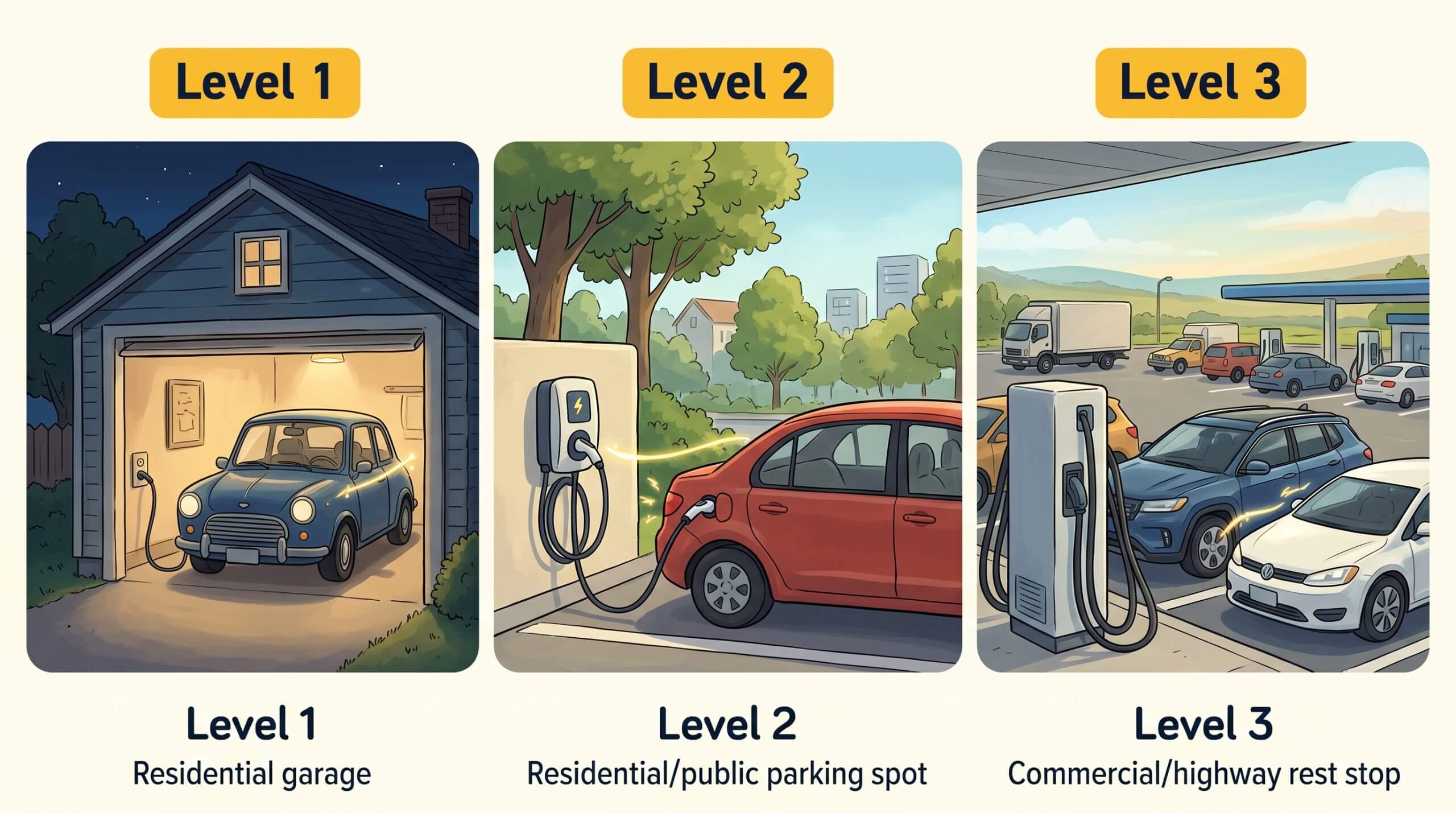
Standard 120V Outlet
Uses a standard household 120V wall outlet. Adds roughly 3–5 miles of range per hour. Best for plug-in hybrids or drivers with minimal daily commutes. Installation requires only a dedicated 15-amp circuit and no electrical panel upgrades.
Station cost: $0–$50 (cordset included with most EVs)
240V Dedicated Station
Requires a 240V circuit and dedicated electrical panel capacity. Adds 25–35 miles of range per hour. The preferred home charging choice for full battery EVs. Requires a certified installer to pull permits and ensure code compliance.
Station cost: $300–$1,200 (hardware)
480V DC Fast Charging
Commercial-grade infrastructure delivering 60–100+ miles in just 20 minutes. Requires massive electrical infrastructure and three-phase power. Not suitable for single-family home installation without a significant solar or battery backup integration.
Station cost: $15,000–$150,000+ (commercial)
What Drives EV Charger Station Cost?
The total installed cost of a home or commercial charging setup varies based on hardware selection, electrical panel capacity, and whether your property requires infrastructure upgrades to support clean energy loads.
Hardware
Level 2 smart stations range from $300–$1,200 depending on amperage (30A vs 50A vs 60A), Wi-Fi connectivity, and load-balancing features. Commercial Level 3 stations run $15,000–$150,000 before site prep.
Electrical Panel
If your current electrical panel is at capacity, a certified installer will recommend a panel upgrade ($1,500–$4,000). This is the most common hidden cost in older homes. Load-shedding smart panels can sometimes eliminate this need.
Circuit & Labor
Running a dedicated 240V circuit typically costs $300–$1,500 in labor depending on distance from panel, whether walls are open, and whether the garage is attached or detached.permits and inspection fees add $150–$500.
Solar Integration
Pairing your station with solar panels creates a true clean energy setup. This requires additional design work and smart inverter configuration. The combined system significantly reduces long-term operating costs and qualifies for federal tax credits.
Why You Need a Certified Installer
Every EV charging station installation must be performed by a licensed, certified electrician to ensure safety, code compliance, and manufacturer warranty validity. Improper wiring can create fire hazards, void equipment warranties, and cause premature equipment failure.
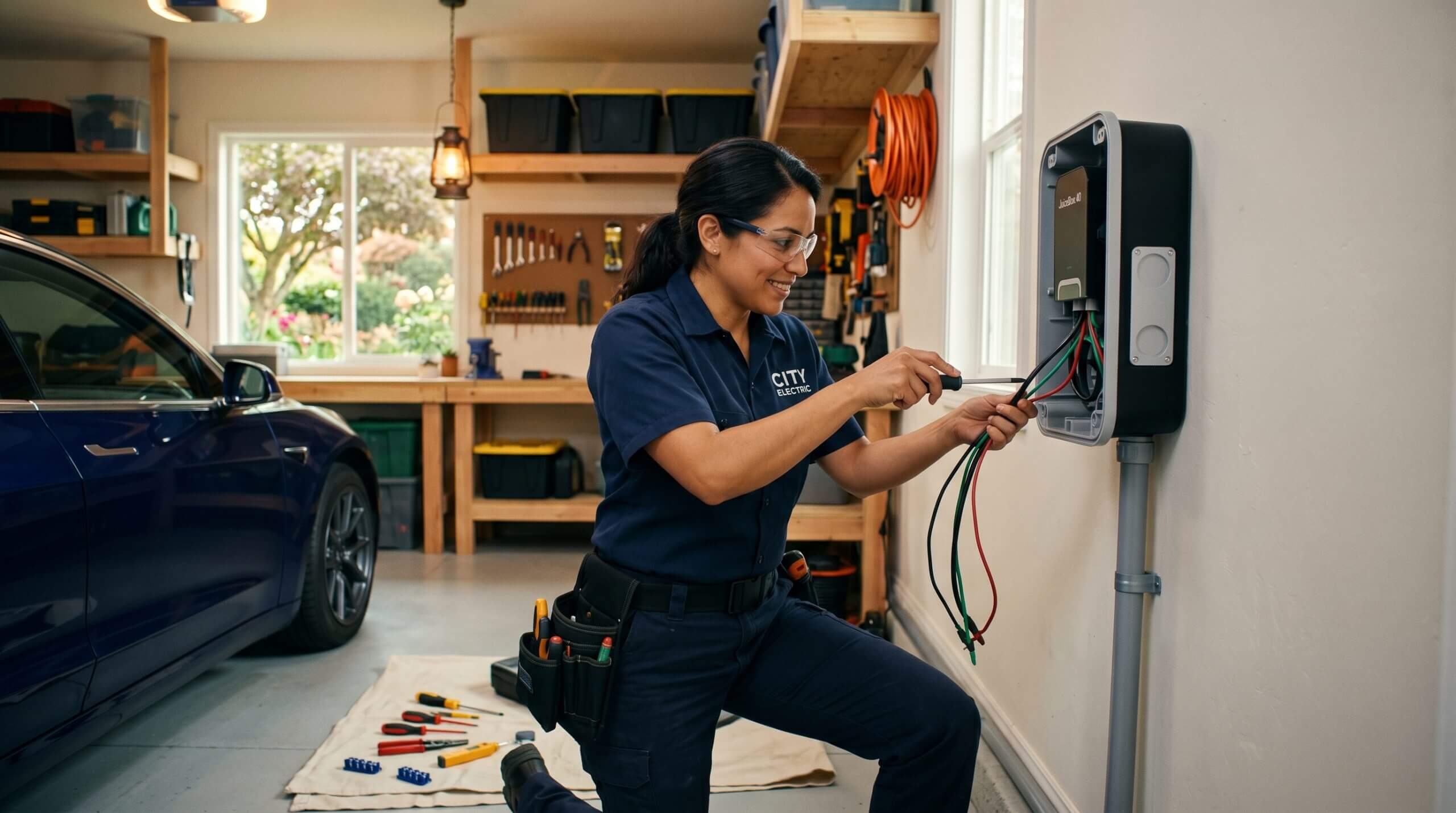
Our Certified Installation Process
Site Assessment
We evaluate your current electrical panel capacity and identify whether an electrical panel upgrade is needed for home charging.
Circuit Design
We engineer a dedicated 240V circuit pathway from panel to station location, optimizing wire runs for efficiency and safety.
Permit Filing
We handle all permit applications and coordinate required inspections with your local Authority Having Jurisdiction (AHJ).
Final Inspection
We verify GFCI protection, grounding, circuit sizing, and station mounting before labeling the panel and closing out permits.
Permits & Inspection: What to Expect
Permits are non-negotiable for any EV charging station installation involving a new dedicated circuit. Most municipalities require an electrical permit, and a post-installation inspection from the local Authority Having Jurisdiction (AHJ) before the station can be energized.
What Gets Pulled
A dedicated circuit permit covering the 240V wiring, circuit breaker sizing, GFCI protection requirements, and the mounting location for the station in your garage or driveway.
What Gets Inspected
The AHJ inspector verifies wire gauge, circuit protection rating, grounding continuity, GFCI trip testing, and that the station is mounted to a structural surface with proper clearances.
Why It Matters
Unpermitted electrical work can void your homeowner’s insurance, cause issues during a home sale, and create safety hazards that an inspection would catch before drywall goes up.
Commercial Clean Energy Infrastructure
For businesses, commercial properties, and fleet operators, installing EV charging infrastructure is a strategic investment in clean energy that attracts customers, supports employee retention, and positions your organization as a leader in sustainability. Our team engineers and deploys scalable charging networks across retail, healthcare, industrial, and office environments.
Retail & Hospitality
Attract EV-driving customers with Level 2 or Level 3 stations. Increases dwell time, google reviews, and repeat visits.
Workplace Charging
Offer employees home charging as a benefit. Managed load-balancing stations prevent facility electrical overloads during peak hours.
Fleet Operations
Design and deploy high-amperage commercial charging depots for delivery fleets, service vehicles, and shuttle operations.
18 Markets. One Master Contract.
National reach with local crews. Each market has a dedicated project manager. No call centers. No sub-contractor middlemen.
EV Charging Station FAQ
How long does a Level 2 home charging installation take?
A certified electrician typically completes a Level 2 home charging station installation in 4–8 hours. Homes with an already-available 240V circuit or adequate electrical panel capacity can often be completed in a single visit. If an electrical panel upgrade is required, plan for an additional 1–2 days for utility interconnection and AHJ re-inspection.
Do I need permits for EV charger installation?
Yes. Any new dedicated 240V circuit requires an electrical permit regardless of whether you are installing in a new garage, attached garage, or driveway.permits and subsequent AHJ inspection are required to energize the station and verify code compliance. Your certified installer handles the permit filing and coordinates the final inspection.
What is the difference between Level 1 and Level 2 home charging?
Level 1 uses a standard 120V outlet and adds 3–5 miles of range per hour, making it suitable only for plug-in hybrids or drivers with very short daily commutes. Level 2 requires a 240V circuit and dedicated station hardware, delivering 25–35 miles per hour of charge. Level 2 is the standard recommendation for full battery EVs and most home installations.
Will my electrical panel need an upgrade?
Many older homes (pre-1990) have 100-amp panels that may require an upgrade before a Level 2 station can be safely installed. A certified installer evaluates your current load, the station’s amperage requirements, and available panel capacity. If your home already has a 200-amp panel with available space, an upgrade may not be necessary.
Can I integrate EV charging with solar panels?
Absolutely. Pairing Level 2 home charging with solar panels creates a clean energy system where your vehicle runs primarily on self-generated solar power. This requires a solar-ready EVSE station and coordination between your solar installer and certified electrician. The combined system significantly reduces long-term operating costs.
What is a certified EVSE installer?
A certified EVSE (Electric Vehicle Supply Equipment) installer is a licensed electrician with specific training and experience in EV charging infrastructure. They understand NEC Article 625 requirements, local AHJ codes, station manufacturer specifications, and the electrical panel modifications required for home and commercial charging installations.
Ready to Power Up Your Property?
Whether you need a single Level 2 home charging station or a full commercial EV infrastructure deployment, Bates Electric has the certified electricians to get it done right.