



Wait Until Something Fails, Then Scramble
- Electrical problems stay hidden inside panels and behind walls until a breaker trips, a motor seizes, or worse
- Visual inspections miss the early warning signs — overheating connections look normal on the outside
- When equipment fails, the resulting downtime costs 10 to 50 times more than the repair itself
- Insurance claims after an electrical fire get denied when there is no record of preventive maintenance
- Hiring a separate thermography company means they scan the system but cannot fix what they find
- You end up paying twice — once for the inspection report and again for an electrician to do the actual repair
Find It With Infrared, Fix It the Same Day
- Licensed electricians perform the infrared scan and understand exactly what the temperature data means
- Thermal imaging locates hot spots, loose connections, and overloaded circuits while your system stays running
- When we find a problem, we can often repair it the same visit — no second trip, no second company
- Detailed reports with temperature readings, infrared photos, and prioritized repair recommendations
- Meets NFPA 70B standards for infrared electrical inspection and satisfies insurance documentation requirements
- Annual thermal imaging programs for commercial and industrial facilities that need ongoing monitoring
Electrical Thermal Imaging Services
From residential panels to industrial switchgear, these are the services we deliver using calibrated infrared detection cameras operated by licensed electricians who also serve as certified thermographers.
Electrical Panel Scanning
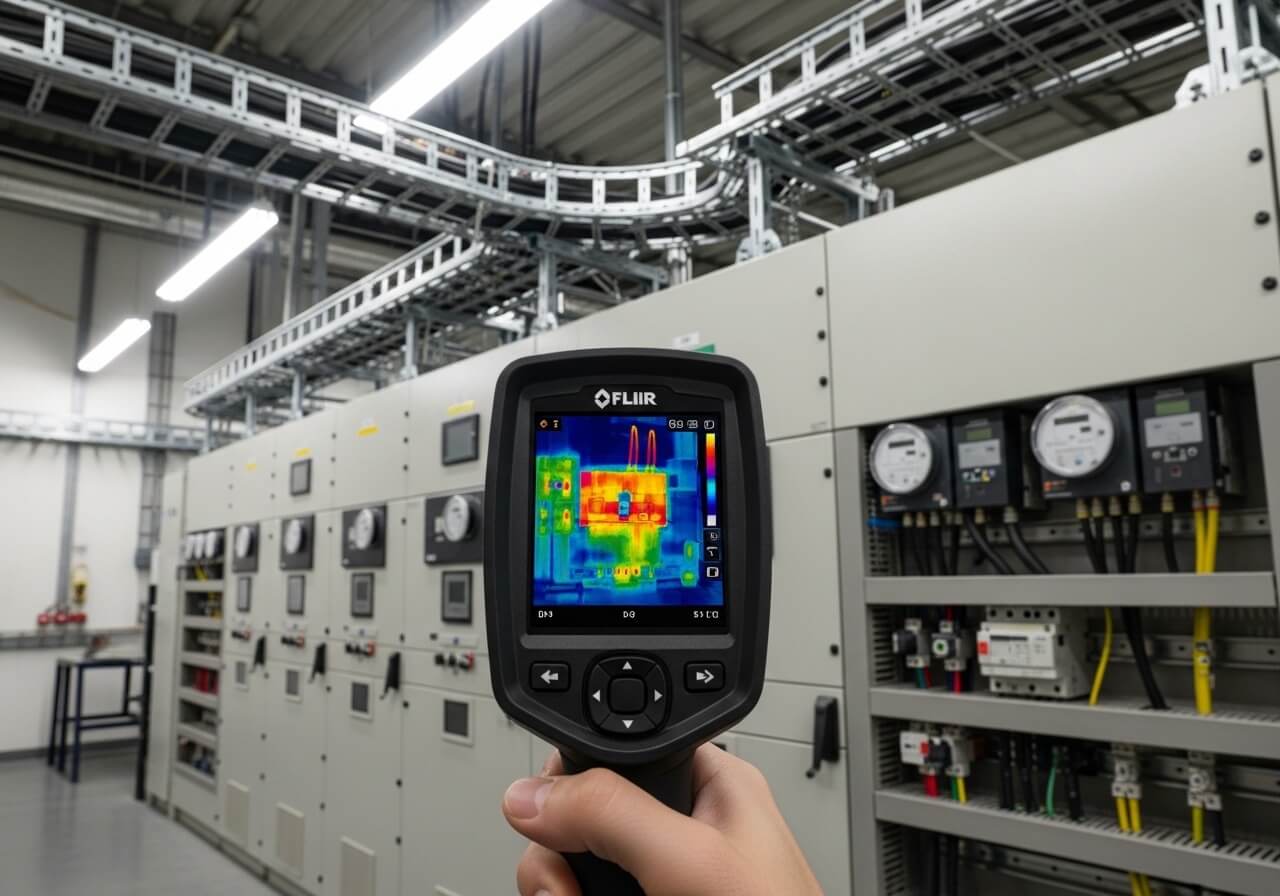
Infrared scanning of residential and commercial electrical panels to detect loose bus bar connections, overheating breakers, unbalanced loads across phases, and deteriorating components. We scan under normal operating load so the thermal signature reflects real-world conditions. Hot spots that indicate a failing connection or overloaded circuit show up immediately on the infrared image.
Wiring & Connection Inspection
Infrared scanning of wire terminations, junction boxes, splices, and conduit runs to locate connections that are generating abnormal heat. A single loose wire nut or corroded lug can run 30 to 50 degrees above the surrounding connections — a temperature variation that indicates a developing problem. These hot spots are invisible to the naked eye but show up clearly during a thermal imaging inspection before they cause a failure or fire.
Motor & Bearing Thermography
Thermographic scans of electric motors, bearings, and drive components to detect overheating caused by misalignment, lubrication failure, winding insulation breakdown, or excessive load. A motor running hot will eventually seize. An infrared scan catches the temperature rise weeks or months before failure, giving you time to schedule the repair instead of dealing with an emergency shutdown.
Switchgear & Busway Inspection
Infrared scanning of medium and high-voltage switchgear, bus ducts, transformers, and distribution systems. These carry heavy loads and generate significant heat at every connection point. A trained electrician with thermal imaging experience can identify potential failing contactors, corroded bus bar joints, and overloaded tap connections that traditional methods cannot see without de-energizing the system.
HVAC System Thermal Scanning
Infrared scanning of HVAC electrical components, compressor motors, contactors, and control wiring to identify overheating before it leads to system failure. We also scan ductwork and air handlers for temperature variations that indicate leaks, blockages, or insulation gaps. Combined with our electrical expertise, we diagnose whether a thermal anomaly is an electrical problem, a mechanical problem, or both — helping prevent costly breakdowns.
Roof & Insulation Moisture Detection
Thermal imaging can detect moisture trapped in flat roofing systems, behind walls, and under insulation that visual inspection cannot see. Wet insulation holds heat differently than dry material, creating distinct patterns on the infrared image. Finding moisture early prevents mold growth, structural damage, and heat loss. We pinpoint the exact location so repairs target the problem area instead of tearing out entire sections.
“Bates was super professional, and easy to work with!! You can tell the Electricians are all experienced and some of the most respectful that I have ever used. They came in to diagnose a bunch of issues in my rental home. Fixed the issue fast and efficiently, gave me a quote on replacing a bunch of lights and fans at a really fair price, and delivered quality work.”
— Paul Harris, Verified Google Review, Columbia SC
Infrared scanning done by the electricians who fix what we find
Most infrared inspection companies are scan-only outfits. They point a camera at your systems, hand you a report, and leave. Then you hire an electrician to actually fix the problems. That means two companies, two schedules, and a gap between when the problem is found and when it gets repaired.
Bates Electric is the electrician. When our infrared scan finds a loose connection, an overloaded breaker, or a failing motor winding, we can often repair it the same day. One company performs the inspection, correctly interprets the thermal data, and executes the repair. No handoff, no waiting for a second contractor.
- Licensed electricians trained as Level II thermographers
- Calibrated infrared cameras with detailed reporting
- Same-day repair capability — scan and fix in one visit when possible
- NFPA 70B compliant process for insurance and compliance documentation
- Annual programs for commercial and industrial facilities to prevent failures and track conditions
Infrared Capabilities at a Glance

What to Know Before Scheduling an Infrared Scan
Infrared scanning is one of the most effective predictive tools available for electrical systems. Here is what facility managers, property owners, and building operators should understand about how this technology works and what it can find. Learning these basics helps you identify potential problems and ask the right questions when hiring an inspector.
How a Thermal Camera Sees Electrical Problems
Every electrical connection has resistance, and resistance generates heat. A properly torqued, clean connection generates minimal heat. A loose, corroded, or damaged connection generates more. An infrared imaging camera measures surface temperatures of every component in its field of view and displays it as a color-coded image. A trained electrician can read that image and distinguish between normal operating temperatures and thermal anomalies that signal a developing problem. The key is performing the scan while the system is under load — a cold panel tells you nothing.
NFPA 70B and Insurance Requirements
NFPA 70B (Recommended Practice for Electrical Systems) recommends annual infrared scans for all commercial and industrial electrical systems. Many insurance underwriters require thermal imaging inspections as a condition of coverage, particularly for warehouses, manufacturing facilities, data centers, and multi-tenant commercial buildings. A documented program with a qualified electrician demonstrates due diligence and can reduce premiums. More importantly, it catches problems that cause fires, outages, and energy losses before they happen.
Why Electricians Deliver Better Results
Anyone can point an infrared camera at an electrical panel. The value is in knowing what the data means. A Level II thermographer who is also a licensed electrician understands the system behind the temperature readings. They know whether a hot breaker is overloaded, undersized, or failing. They know whether a warm connection is within tolerance or needs immediate attention. And when the scan reveals a problem, they can fix it on the spot instead of writing a report and sending you to find a separate electrician. Bates Electric combines thermal imaging expertise with decades of electrical service and deep system knowledge.
Infrared Scanning Beyond Electrical Systems
Thermal imaging is not limited to electrical work. Infrared scans locate moisture intrusion in flat roofs, missing or damaged insulation in walls and ceilings, air leaks around windows and doors, and plumbing leaks behind finished surfaces. For building owners and facility managers, a comprehensive scan covers both the electrical infrastructure and the building envelope in a single visit. We document everything with calibrated infrared equipment and deliver a prioritized report so you know exactly where to focus your budget and reduce waste.
What Infrared Scans Typically Reveal
These are the most common problems our electricians uncover in commercial, industrial, and residential facilities. Most of them are completely invisible during a standard visual walk-through.
Loose & Corroded Connections
The single most common finding during an infrared scan. Loose lugs, corroded terminals, and improperly torqued connections create high-resistance points that generate heat. A connection running 20 to 40 degrees above adjacent connections needs attention. Over 50 degrees above normal is a critical finding requiring immediate repair.
Overloaded Circuits & Breakers
Breakers carrying more current than their rating show elevated temperatures on an infrared scan. Unbalanced three-phase loads create uneven heating across phases that thermal imaging captures instantly. These overload conditions cause premature breaker failure, increased fire risk. The thermal image documents the imbalance so we can redistribute loads properly.
Failing Motors & Bearings
Motor windings that are breaking down run hotter than normal, running inefficiently. Bearings that are wearing out generate friction heat visible on the infrared image. Catching motor temperature variations early lets you schedule a bearing replacement or motor rewind during planned downtime instead of dealing with an unexpected failure during production.
Is This You?
“We had a breaker trip and nobody can figure out why.”
An infrared scan can find the root cause without guesswork. If a loose connection, overloaded circuit, or failing breaker caused the trip, a thermal imaging inspection will show elevated temperatures at the problem point. Our inspector traces the anomaly to the specific component and repairs it so it does not happen again.
“Our insurance company is asking for an infrared inspection.”
Insurance underwriters increasingly require documented infrared scans for commercial and industrial policies. Our reports include calibrated thermal images, temperature readings, component identification, severity classifications, and repair recommendations. The report satisfies insurer requirements and gives you a clear action plan to reduce risk and improve performance.
“I smell something burning but nothing looks wrong.”
Electrical burning smells often come from connections overheating behind panels, inside walls, or in areas you cannot see. Thermal imaging sees through the surface and detects the heat source. This is one of the most important applications of an infrared scan — finding the source of a smell or symptom that has no visible cause before it becomes a fire.
“We keep replacing motors and do not know why they fail.”
Recurring motor failures usually have an upstream electrical cause — voltage imbalance, harmonics, or an overloaded circuit. An infrared scan of the motor, its wiring, and the feeding circuit breaker reveals whether the motor itself is the problem or the electrical supply is. We diagnose the real cause so you stop replacing motors, and fix the root issue.
“We want to catch problems before they shut us down.”
That is exactly what a scheduled infrared program does. Annual or semi-annual thermal imaging scans of your electrical system create a baseline and track changes over time. A connection that was fine last year but is now running 15 degrees hotter gets flagged and repaired during a planned service window before it causes an unplanned outage.
“Our building is old and we have no idea what shape the wiring is in.”
Older buildings accumulate decades of wiring additions, modifications, and jury-rigged connections. A comprehensive infrared survey maps the entire electrical system and identifies every hot spot, overloaded circuit, and questionable connection without opening a single wall. The report becomes your electrical roadmap for prioritizing upgrades, repairs, and cost savings.
How We Work
Every infrared scan follows the same four-phase process — from scheduling through follow-up repair.
Scope & Schedule
We review your facility, identify the systems to be scanned, and schedule the visit during normal operating hours. Systems must be under load for the infrared data to be meaningful, so we coordinate timing with your operations team to monitor manufacturing processes and electrical loads at peak.
Infrared Scan
A licensed electrician scans every panel, switchgear, motor, and connection point with calibrated thermal imaging equipment. Each anomaly is photographed, temperature-documented, and cross-referenced against normal operating ranges for that component type.
Report & Priorities
You receive a detailed report with annotated infrared images, temperature readings, severity ratings, and specific repair recommendations. Findings are prioritized: critical items that need immediate attention, items to schedule within 30 days, and items to monitor at the next scan. We also flag areas of heat loss and floor heating runs that may indicate hidden issues.
Repair & Verify
We repair critical findings immediately when possible. Scheduled repairs are completed on your timeline. After repairs, we re-scan the affected areas with thermal imaging to verify the anomaly is resolved. Every repair is documented in an updated report for your records and insurance file.
18 Markets. One Master Contractor.
Bates Electric provides infrared scanning services across 18 locations. Same calibrated infrared cameras, same licensed electricians, same NFPA 70B compliant process — wherever your facility is.
- Every market staffed with licensed electricians trained in thermal imaging
- Commercial, industrial, and residential scans in all locations
- Annual programs with baseline tracking and year-over-year comparison to detect changes over time
Ready to See What Your Electrical System Is Hiding?
Schedule an infrared scan with Bates Electric. We will survey your panels, switchgear, motors, and connections using thermal imaging, document every finding, and fix critical issues the same visit when possible. No separate thermography company. No waiting for a second contractor.
Frequently Asked Questions
Electrical thermal imaging uses an infrared camera to detect heat patterns in electrical systems without shutting anything down. Every electrical connection generates some heat, but loose connections, overloaded circuits, and failing components generate abnormal heat that a thermal imaging camera can see. A trained electrician reads the thermal image to identify hot spots, then traces the cause to a specific breaker, connection, wire, or component. It is the fastest way to find electrical problems before they cause downtime, damage, or fire.
A licensed electrician scans your electrical panels, switchgear, wiring, motors, and other components with a calibrated thermal camera while the system is under normal load. The camera converts heat radiation into a color-coded image where hotter areas show as red, orange, or yellow against a cooler blue and green background. The electrician photographs each area, documents any anomalies with temperature readings, and provides a detailed report with findings and recommended repairs. The entire process is non-contact and non-destructive — nothing gets opened, disconnected, or shut down during the scan.
NFPA 70B recommends annual infrared scans for commercial and industrial facilities. Insurance companies often require them as a condition of coverage, especially for facilities with high electrical loads. Critical infrastructure like data centers, hospitals, and manufacturing plants benefit from quarterly or semi-annual scans. Residential scans are typically done when there is a specific concern — flickering lights, tripping breakers, burning smells, or after a major renovation that adds electrical load.
An infrared scan detects loose or corroded connections, overloaded circuits, unbalanced loads across phases, failing breakers, deteriorating fuses, damaged contactors, overheating transformers, and bearing failure in motors. It also finds moisture intrusion in walls, roofs, and insulation that a visual check would miss. Many of these problems are invisible until they cause a failure or fire. A single loose connection running 20 degrees above normal can be caught months before it causes an outage or wastes significant energy.
Yes. The process is completely non-contact and non-destructive. The thermal camera reads heat radiation from surfaces without touching anything. Your system stays running under normal load during the scan, which is actually required for accurate results — you need the system energized and producing its normal heat signature for the data to be meaningful. No panels are opened, no wires are disconnected, and no downtime is needed. That is one of the biggest advantages over traditional electrical testing methods.
Costs depend on the size and complexity of the system being scanned. A residential scan typically runs $150 to $400. Commercial and industrial scans range from $500 to $2,000 or more depending on the number of panels, switchgear, motors, and other components. Given that a single electrical fire can cause hundreds of thousands in damage and a failed motor can halt production for days, the cost is minimal compared to what it prevents. We provide a clear quote based on your specific facility size.