



Buying the electric car is the fun part. The part that actually matters is whether your garage, panel, wiring, and parking setup can support a safe Level 2 charger without nuisance breaker trips or expensive surprises.
If you are planning an EV charger installation in St. Louis, Bates Electric can check the electrical capacity first, explain the cleanest installation path, and handle the dedicated circuit, charger mounting, permitting, and final testing.
Schedule EV Charger Installation Call 636-242-6334
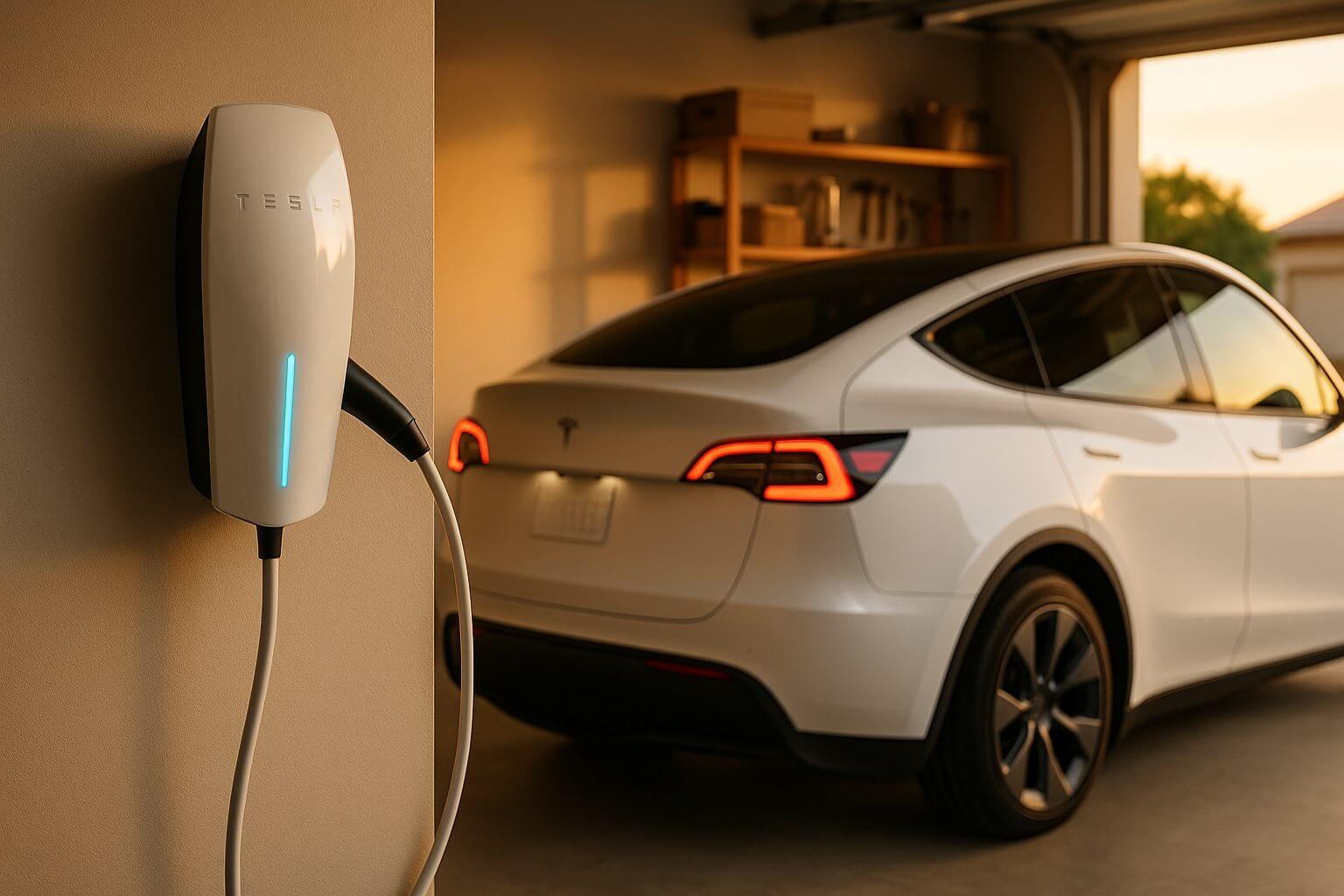
What Bates Checks Before Installing a Home EV Charger
A charger is not just another outlet. A Level 2 EV charger usually needs a dedicated 240-volt circuit, proper breaker sizing, correct wire gauge, grounding, GFCI protection where required, and enough panel capacity to handle the load safely.
Panel capacity
We look at your service size, existing breaker load, open spaces, and whether the panel has room for a 40- to 60-amp EV charging circuit.
Parking layout
Garage, driveway, detached garage, and outdoor parking setups all affect conduit runs, cable reach, charger placement, and weather protection.
Charger type
Tesla Wall Connector, ChargePoint, JuiceBox, Grizzl-E, Emporia, Wallbox, and other Level 2 chargers each have installation requirements.
Level 1 vs. Level 2 Charging for St. Louis Homeowners
Level 1 charger
A Level 1 charger plugs into a standard 120-volt outlet. It can work for plug-in hybrids or short daily drives, but it is slow and often frustrating for full EV owners.
- Uses a standard household receptacle
- Adds limited range per hour
- Usually not ideal for daily EV commuting
Level 2 charger
A Level 2 charger uses a 240-volt dedicated circuit and is the normal choice for overnight home charging, especially for Tesla, Rivian, Ford Lightning, Chevy, Hyundai, Kia, and Nissan EVs.
- Faster charging at home
- Usually requires a licensed electrician
- May require a panel upgrade or load management
When an EV Charger May Require a Panel Upgrade
Some St. Louis homes can support a charger with a clean dedicated circuit. Others need a panel upgrade, subpanel, load management device, or a different charger amperage. The goal is not to oversell the biggest setup; it is to install the charger your home can safely support.
You may be fine
Your panel has available capacity, enough physical breaker space, and the charger location is close to the panel.
You may need adjustment
The charger can work at a lower amperage, with load management, or with a subpanel depending on your home’s existing electrical demand.
You may need an upgrade
Older service, crowded panels, repeated breaker trips, or major remodel plans may point toward a St. Louis electrical panel upgrade.
Residential and Commercial EV Charging Are Different Jobs
A home charger is usually about convenience, overnight charging, and one vehicle. A commercial EV charging station has a different set of decisions: parking flow, user access, billing, multi-station load, ADA placement, signage, uptime, and future expansion.
Home EV charger installation
Best for homeowners who want reliable overnight charging in a garage, carport, or driveway without relying on public charging stations.
Commercial charging stations
Best for offices, apartments, retail centers, hotels, fleet parking, and businesses that want charging access for employees, customers, or tenants.
For commercial projects, start with a real electrical plan instead of guessing where chargers should go. Bates Electric handles commercial electrical work in St. Louis and EV charging infrastructure planning.
What the Installation Process Looks Like
1. Electrical review
We inspect the panel, service capacity, breaker space, grounding, and route from the panel to the charger location.
2. Quote and plan
You get a clear recommendation: charger amperage, circuit route, equipment placement, and whether any panel work is needed.
3. Dedicated circuit
We install the correct breaker, wiring, conduit, outlet or hardwired connection, and weather-rated materials where needed.
4. Charger mounting
The EV charger is mounted where the cable reaches comfortably without creating a trip hazard or blocking daily garage use.
5. Permit and inspection
When required, Bates handles permitting and inspection steps so the installation is code-compliant and documented.
6. Testing and walkthrough
We test the charger, confirm operation, explain basic settings, and show you what to watch for after installation.
EV Charger Questions St. Louis Homeowners Ask
Do I need a Level 2 charger?
If you drive daily and want the car ready every morning, usually yes. Level 1 charging can work for lighter use, but most full EV owners prefer Level 2 charging at home.
Can my existing panel handle it?
Maybe. The only honest answer comes from checking your panel and doing a load review. Some homes have plenty of capacity; others need an upgrade or load management.
Can a charger be installed outside?
Yes, if the equipment and wiring method are rated for exterior use. Outdoor installations need proper weather protection, mounting, conduit, and code-compliant materials.
Should I buy the charger first?
You can, but it is smarter to confirm your electrical setup first. Charger amperage, connector type, Wi-Fi needs, and placement can affect the installation plan.
Who should install it?
Use a licensed electrician familiar with EVSE installation, dedicated circuits, permitting, load calculations, and local St. Louis electrical requirements.
Ready to Stop Guessing?
Bates Electric can tell you whether your St. Louis home is ready for a Level 2 EV charger, what needs to change, and the safest way to install it.
Get an EV Charger Quote St. Louis Electricians
Licensed & insured electrical contractors serving St. Louis and the surrounding metro.